
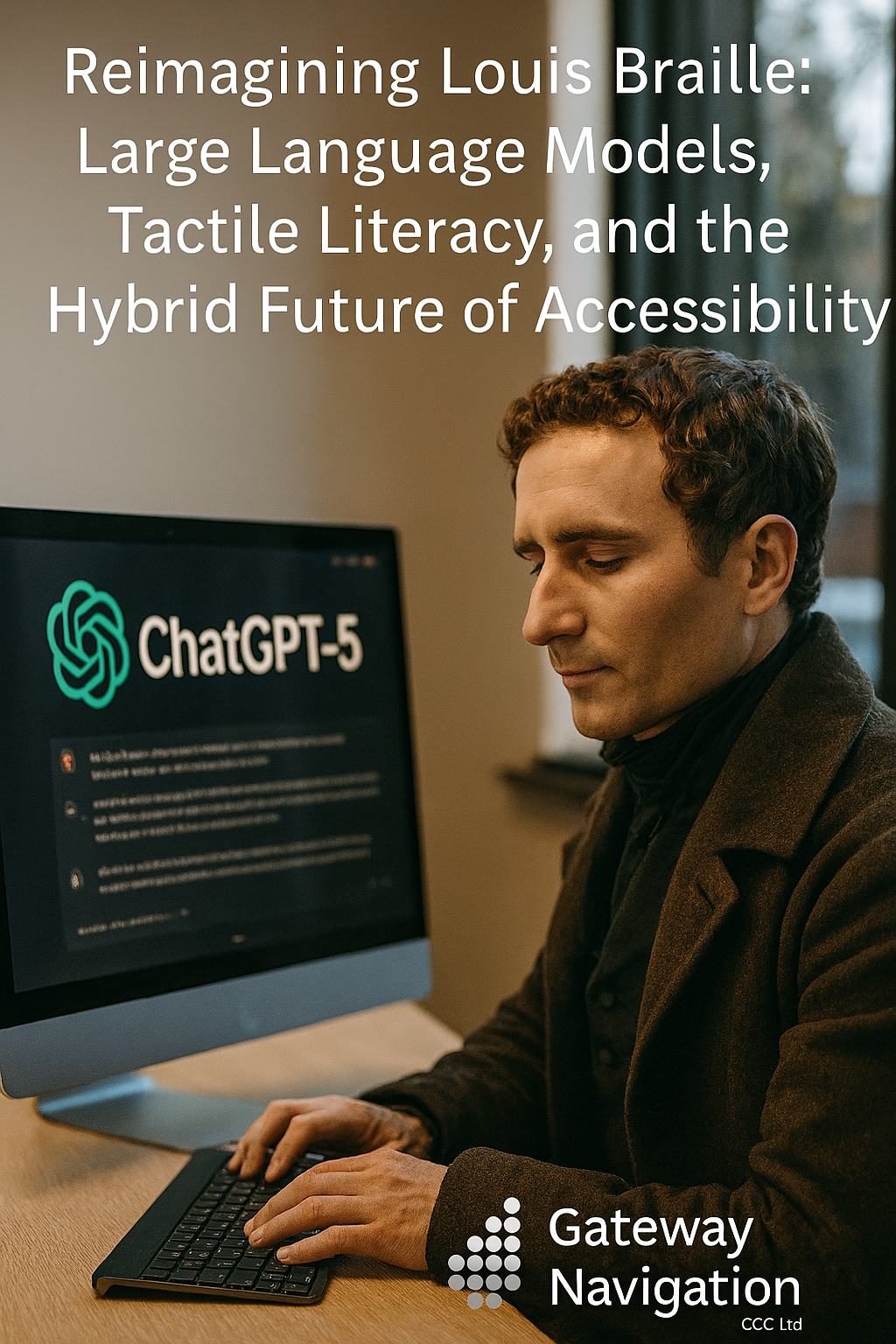
AI, Tactile Literacy, and the Hybrid Future of Accessibility
Editor’s Note: Louis Braille (1809-1852) was a French educator who, after losing his sight at a young age, invented the Braille system-a tactile code that revolutionized literacy for people who are blind. His work empowered generations to read, write, and participate fully in society, transforming lives through independence and access to information. Despite the enduring importance of Braille, there remains a widespread misconception that it has become obsolete in the digital age. In reality, Braille remains vital for deep learning, privacy, and literacy, yet too many students and adults who lose sight later in life are not consistently taught Braille, creating barriers to education and inclusion that persist today.
Two hundred years ago, a thirteen-year-old boy who lost his sight in childhood created one of the world’s most powerful codes. Braille.
It became a global language of independence, literacy, and equality. For the first time, blind learners could read, study, and write on their own terms, challenging the silence that society imposed.
Now imagine that same thirteen-year-old in today’s world, seated with a slate and stylus, but also with a sleek computer running ChatGPT-5.
Would he still use a tactile code, or would he explore how artificial intelligence could redefine independence itself?
At Gateway Navigation CCC Ltd, we believe Louis Braille would do both.
His work was never about the code alone it was about access, dignity, and participation. He saw the limits of his time and built a system that transcended them.
Today, people who are blind, deafblind, and low-vision stand at a similar threshold. Braille remains vital, yet new tools powered by artificial intelligence are expanding what accessibility and inclusion can mean.
The evolution from Braille to AI is not a replacement but a continuum of empowerment.
Through our ongoing AI initiatives, Gateway Navigation is exploring how artificial intelligence, tactile technology, and human-centred design can work together to shape a hybrid future of accessibility and inclusion.
These initiatives bring together universities, accessibility labs, and community innovators to ensure AI serves as an enabler, not a substitute, for tactile literacy and human connection.
Rather than choosing between Braille and technology, this new generation of innovators will weave the two together creating systems where touch and thought coexist.
Braille still provides privacy, deep learning, and tactile comprehension skills no digital assistant can replace.
At the same time, tools like ChatGPT, Meta AI, and other advanced platforms such as Google Gemini and Microsoft Copilot are enabling real-time summarization, creative exploration, and interactive learning with fewer barriers. These AI systems bring powerful features like natural language understanding, voice interaction, and personalized assistance that support accessibility for blind and low-vision users.
When connected to Braille displays, AI becomes a bridge between tactile and digital worlds, allowing users to read, edit, and converse seamlessly in real time. Adaptive AI guides can now tailor content to individual learning styles, democratizing access to education, employment, and digital creativity. Innovations from platforms like Apple’s VoiceOver and Amazon Alexa further enhance independent navigation and learning, giving users more control over their digital experiences and supporting a truly inclusive environment.
This hybrid model rooted in both tradition and innovation reflect Gateway Navigation’s belief that accessibility and inclusion thrive when technology amplifies, rather than replaces, the human experience.
In our work with members from the blind, deafblind, low-vision community, and with accessibility and inclusion stakeholders, we have seen firsthand how AI can transform daily independence.
It supports communication, assists with writing, and simplifies the digital environments that too often exclude people who navigate by sound and touch.
Yet we also know tactile literacy remains more than a skill it is a right, and a foundation of self-determined learning.
Gateway’s AI initiatives are intended to co-design and test real-world solutions that merge tactile and AI interaction from smart campuses and digital wayfinding to inclusive education and employment systems.
The goal is simple: to make accessibility and inclusion built in, not added later.
Louis Braille never rejected progress; he embraced it, fusing the physical and intellectual worlds into one language of empowerment. Today, we honour that same spirit by re-imagining literacy for the digital age.
We invite members of the blind, deafblind, low vision community, educators, technologists, and public policy decision makers to explore this hybrid future with us.
Let’s design systems that respect the past, empower the present, and envision a more inclusive tomorrow.
For more about our accessibility and inclusion work, visit gnc3.com or email us at partners@gnc3.com.
Checklist for Inclusion
- Ensure all digital content is compatible with Braille displays and screen readers.
- Recognize tactile literacy as a fundamental right in all programming.
- Collaborate regularly with blind low-vision community members, advocates, and subject experts like Gateway Navigation
- .Keep curricula and guides updated to reflect new technology.
- Understand AI Technology for Inclusion. 1
1: Understanding AI Technology for Inclusion: Advanced artificial intelligence (AI) platforms, such as ChatGPT, Meta AI, Google Gemini, and Anthropic Claude, rely on large language models that process natural language, generate human-like text, and assist users in real time. When incorporated with adaptive devices like Braille displays and screen readers, these technologies become powerful tools for accessibility and inclusion, supporting communication, learning, and independent navigation for blind and low-vision individuals. Training everyone to use these tools ensures a more inclusive digital environment and empowers all users to participate fully in education, employment, and daily life.
End of Document
Leave a Reply