
Categories
Advocacy Built Environment Transportation

Revolutionizing Smart City Wayfinding 

Waymap Launches Across the Entire Transit System – Indoor, Outdoor, and Underground.


Navigating public transit can be a challenge for anyone, including individuals who are blind, have low vision, or have other mobility needs. Complex stations, unfamiliar routes, elevator outages, and inaccessible signage create barriers that make independent travel difficult. But what if an app could provide precise, step-by-step navigation, along with alert notifications and rerouting, making public transit truly inclusive? 

Waymap’s Official Launch: A Game-Changer for Inclusive Navigation 

From Early Trials to a Breakthrough in Inclusive Wayfinding 

Back in 2015, at Gateway Navigation, we began exploring how emerging technologies—specifically iBeacons and the iPhone—could revolutionize navigation for people who are blind or have low vision. By 2017, we had connected with the Wayfindr Project in the UK and Right-Hear in Israel, running our own BLE beacon trial at the Vancouver Central Library. Looking back, it’s remarkable how quickly technology has evolved in such a short time. 

Over the years, two key approaches to inclusive digital wayfinding (Augmented Reality / AR) have emerged: 

  • Camera-based vision technology, used by innovative app developers including Aira, GoodMaps, and NaviLens. 
  • Smartphone sensor-based navigation apps, led by Waymap and Haptic. 

Which brings us to today—and our excitement about the official Waymap launch across the Washington Metropolitan Transit Authority (WMTA). This milestone is more than just a technological achievement—it’s a transformational step toward universal accessibility. Waymap is led by Tom Pey, a blind visionary dedicated to fundamentally changing how people, regardless of their challenge, navigate the world. 

Waymap Launches Across the Entire WMTA: Revolutionizing Navigation for All 

Navigating complex city spaces can be challenging, but for people who are blind, have low vision, or have mobility limitations, it can often feel daunting or impossible. That’s where Waymap comes in—an innovative navigation app designed to make cities and transit systems moreinclusive for everyone. Whether you are hopping on a bus, catching a train, or simply walking through a station, Waymap provides step-by-step audio / text guidance to help users travel safely and independently. 

A Major Milestone: The WMTA Partnership 

Waymap has taken a significant step forward with its full deployment across WMTA, covering: 

  • 98 rail stations 
  • Over 11,000 bus stops 
  • 325 bus routes 

This launch is the culmination of a four-year partnership between WMTA and Waymap, which began with a successful pilot project at Crystal City station in 2021. Now, Waymap’s real-time navigation works seamlessly in both indoor and outdoor environments, ensuring users can confidently navigate whether they’re in busy stations, on city streets, or underground. 

How Waymap Works 

What makes Waymap revolutionary is its ability to navigate without relying on GPS, Wi-Fi, or cellular signals. Instead, it uses the phone’s internal sensors—such as the gyroscope, accelerometer, barometer, and magnetometer—to gather real-time data. These sensors allow Waymap to determine direction, speed, altitude, and orientation, using AI-powered algorithms to ensure accuracy within one step. 

With precise, step-by-step audio/ text instructions, users can navigate public transit independently and safely, even in signal-dead zones like underground stations. 

Why It Matters 

The launch of Waymap in the WMTA system is not just a technological breakthrough—it’s a significant step toward more inclusive cities. Beyond assisting people with disabilities, this app also benefits seniors, young families, tourists, and newcomers who may struggle with complex transit networks. 

WMTA is also implementing broader accessibility improvements, including: 

  • Updated signage 
  • Intuitive wayfinding icons 
  • Enhancements to overall station accessibility 

Waymap is proving that accessible / inclusive transit benefits everyone—and it’s time to bring this innovation to more cities. 

A Call for Canadian Input: Where Should Waymap Go Next? 

Now that Waymap is revolutionizing transit in Washington, where should it expand next? We believe Canadian cities would greatly benefit from this cutting-edge tool—but we need your input. 

📢 Have Your Say! 

We’re inviting Canadians to share their thoughts on which cities or transit systems should be actively implementing Waymap or other similar innovative solutions. 

🚀 Help Us Make Transit More Accessible! 

If you’re passionate about accessible navigation, we’d love to hear from you! Your feedback will help advocate for better, more inclusive transit solutions across Canada. 

💡 Take our quick survey below to help shape the future of inclusive transit in Canada. Where should Waymap go next? Let’s decide together! 

#Waymap #AccessibleTransit #SmartCities #InclusiveMobility #BlindNavigation #DisabilityInclusion #PublicTransport #UrbanInnovation 

Read App Review for Waymap WMTA
Categories
Built Environment Review Transportation

Review: Waymap Indoor and outdoor Navigation App

Washington, DC Metro Transit Deployment

Editor’s Note:

It is crucial to emphasize that while technology such as Waymap is a significant stride in enhancing independent indoor travel for individuals with vision loss, it does not substitute proper orientation and mobility training, nor the use of mobility aids like a white cane or guide dog. A combination of thorough training and location-based wayfinding technology offers a greater sense of independence and freedom for those with vision loss. As technology alone does not replace the essential training and aids that have long been instrumental in enabling independent navigation for persons who are blind or partially sighted.

Dear Inclusive Design Community,

On November 13, 2023, Cyan Kuo, our dedicated leader of user testing for McGill University’s IMAGE Project (link: https://image.a11y.mcgill.ca), found themselves in Washington, DC. With the assistance of Lauren Babinetz, Test Engineer (US) at Waymap, they seized the opportunity to navigate the city's transit system using the Waymap app (link: https://waymapnav.com), currently in the final stages of preparation for its launch. Special thanks to our colleagues, Julian Jackson of VisionBridge, and Jon Fink, Director of Digital Cities Testbed Centres, for playing a pivotal role in connecting Cyan with Celso Zuccollo, Waymap’s COO, and Lauren, who both graciously facilitated the Washington DC Waymap experience.

While Waymap has been somewhat off our radar recently, last month's announcement revealing its selection as the navigation app for Singapore’s transit authority caught our attention. This prompted us to check in and assess the progress of the Waymap deployment in Washington, DC.

As a quick reminder, on May 24, 2022, Waymap and WMATA announced their partnership to enhance inclusive and equitable train and bus travel in the Washington, DC Metro Area. The deployment is underway, covering 30 Metro train stations and nearly 1,000 bus stops.

During Cyan's exploration of two stations and a bus stop, they noted that the app maintained an impressive accuracy level, staying within one meter or less. It provided clear directions and dynamically adjusted the route to account for changes in elevation, ensuring a seamless interaction with little delay in the delivery of wayfinding instructions. Overall, it was an impressive experience.

In addition, the app is free to end-users, does not require an active data connection to work, and necessitates no venue infrastructure improvements.

However, we were disappointed to find no virtual navigation option. This functionality is beneficial for users who are blind or face challenges in navigating through visual cues, offering them the ability to virtually explore their routes before being on-site. This process fosters increased confidence and a better understanding of the venue surroundings, which can be challenging to grasp in real-time navigation. Ideally, the virtual navigation experience should provide a dead reckoning representation of the intended route, allowing users the option to identify points of interest during their exploration.

That aside, a big thank you to the Waymap Team for their innovation and dedication to improving the digital wayfinding experience for everyone.

Which raises the question: How can we work together to promote the expansion of the Waymap experience in our local communities?

Climate Resilience Planning Creates Unique Opportunity:

As reflected in Cyan’s experience, it is not unreasonable to speculate that the leaps forward in artificial intelligence (AI) and machine learning (ML) over the last couple of years are enhancing the improvement of functionality and precision within the Waymap app. That said, ingenious algorithms and smart device sensors are not the whole story explaining Waymap’s effectiveness in assisting users to navigate complex and unfamiliar spaces.

To understand the element that pulls everything together, we need to look at the app’s utilization of detailed geospatial mapping data to create a comprehensive understanding of the built environment the user needs to navigate. This includes not only Lidar point cloud scans but also architectural floor plans and repositories such as open street maps for outdoor wayfinding.

Interestingly, this major ingredient for dynamic accessible digital wayfinding is readily available through a yet untapped repository of thousands of cloud point scans of  buildings and venues across Canada being gathered as part of Public and Private Sector initiatives. These point clouds are instrumental in generating 3D models of buildings, providing architects, engineers, and designers with tools to assess climate resilience in the built environment. The point cloud scans used in this process present some interesting opportunities for venue managers and owners.

The versatility of these point cloud scans extends beyond their original purpose, as they can be repurposed by app developers like Waymap. This repurposing involves creating essential digital maps for both indoor and outdoor spaces, contributing significantly to enhanced accessibility and inclusion—a development aligning with the expectations outlined in the Accessible Canada Act.

How Does Waymap Work:

Waymap employs a combination of advanced technologies to deliver accurate and reliable navigation for individuals who are blind or partially sighted. Here's a brief overview of how the app works:

  • Audio-based Navigation: Waymap primarily relies on audio cues to guide users. Through the user's smartphone or wearable device, the app provides step-by-step instructions, informing them about the direction and distance to their destination.
  • Geospatial Mapping: The app utilizes detailed geospatial mapping data to create a comprehensive understanding of the environment. This includes not only outdoor spaces but also intricate floor plans for indoor locations.
  • Machine Learning for Route Directions: Waymap leverages machine learning algorithms to recognize and analyze real-time data from the device's sensors. This enables the app to identify accessible routes and provide instant feedback to the user.
  • Accessible User-Friendly Interface: Waymap boasts an intuitive and user-friendly interface designed with accessibility in mind. Users can easily input their destination, customize preferences, and receive clear, concise instructions.

Transformative Potential:

The Waymap navigation app is more than just a tool for getting from point A to point B. It represents a shift towards a more inclusive and accessible world for individuals who are blind or partially sighted. By providing a reliable and efficient means of navigation, Waymap empowers users to explore their surroundings, participate in social activities, and navigate public spaces with newfound independence.

In Conclusion:

Although real-life deployment and user experience in daily routines will be the ultimate review, my reflection on Waymap's journey, from my early stage of testing on the University of British Columbia Campus to its current state of readiness for commercialization, the progress is truly remarkable. The initial promise observed during beta testing has now transformed into a fully-fledged product. Yet, the ultimate measure of success lies in the acceptance it receives from users who are blind or partially sighted, as well as the commitment of venues to invest in its deployment.

Finally, if your organization is exploring the use of inclusive indoor and outdoor wayfinding solutions, we would welcome the opportunity to join your conversation. Our team at Gateway Navigation can be reached by email at partners@gnc3.com.

Sincerely, David Brun

  • Cofounder
  • Gateway Navigation CCC Ltd.
  • North Vancouver, BC, Canada

End of Document

Categories
Built Environment Review Transportation

Navigating the Pros and Cons of Floating Bus Stop Design

Floating Bus Stops: An Exploration

Editor’s Note: In this post, we delve into the advantages and challenges of Floating Bus Stops, considering their impact on accessibility and drawing from my personal experience as an individual with a disability. To begin, let's clarify what a Floating Bus Stop entails: it's a design solution that incorporates a bus stop, pedestrian sidewalk, and a dedicated bike lane. Transit and city planners have been experimenting with this approach to accommodate safe bus pick-ups and drop-offs while maintaining bike lanes. Commuters using these bus stops must traverse the bike lane to access the floating stop or reach the pedestrian sidewalk.

Recently, I embarked on a journey of discovery to explore the concept of floating bus stops. My objective was to formulate a fact-based opinion on this recently implemented transportation solution. This exploration involved participating in a series of workshops organized by Urban Systems Inc., which were funded by BC Transit, TransLink, and the BC Ministry of Transportation. It also included on-site visits to floating bus stops in Metro Vancouver. Today, I am eager to share my insights and reflections on this matter.

First and foremost, I want to express my sincere appreciation to all the workshop participants. Special thanks go to individuals like Linda, Rob, Richard, Bruce, and many other volunteer stakeholders who generously shared their experiences. It's essential to recognize that these contributors often provide invaluable insights without financial compensation, raising questions about equitable remuneration. This issue seems to persist in our society, where paid consultants frequently take the lead, overshadowing the contributions of those most impacted by the policies under consideration.

During our discussions, one aspect that left me disheartened was the use of the term "inclusive bus stops" by Urban Systems Inc. facilitators to describe floating bus stops. As a longtime advocate for accessibility and inclusion, I feel compelled to clarify that this terminology is, at best, misleading and, at worst, a misnomer. Whether this term arises from ignorance or serves as a public relations strategy, it should be avoided.

From a technical standpoint, the concept of floating bus stops, which separates buses and cyclists into designated lanes, has its merits. It offers a safer and more efficient route for bus drivers, eliminating the need to navigate through traffic and reduces conflicts between buses and cyclists sharing the same lane. This aligns with the public's support for greener, healthier cities and the incorporation of bike lanes into urban design. It's worth noting that many visually impaired individuals enjoy tandem cycling with sighted friends and family, underscoring the importance of accommodating both cyclists and pedestrians.

However, the current design of floating bus stops unintentionally pits cyclists against individuals who are blind. This conflict arises from poor design rather than conflicting desires of these two groups. Public transportation by bus is universally accessible, catering to a diverse range of commuters, including individuals with disabilities, seniors, students, new immigrants and young families. BC Transit buses are designed to accommodate cyclists, wheelchair users, and provide support for blind individuals to navigate the system independently and safely. Discount passes also make bus travel more affordable for those with limited incomes.

For individuals with disabilities, who often rely on buses as their primary means of independent transportation, the need to cross a potentially hazardous area like a bike lane to access a bus creates a significant access barrier. Navigating to a floating bus stop is especially unsafe for blind and low vision pedestrians. Unlike crossing automobile traffic light-controlled intersections, where the sound of traffic flow patterns can be relied upon, crossing a bike lane lacks the sound cues that blind individuals rely on to determine when it is safe to cross. This situation leads to frustration and anger on both sides when a blind person enters the bike lane unexpectedly, causing conflicts with cyclists. Additionally, the lack of consistent adherence by a significant percentage of cyclists to the rules of the road, even with marked and signal-controlled crossings, creates uncertainty and anxiety for blind individuals when crossing a bike lane. Moreover, in my discussions outside of the workshops this is a common  concern shared  by many others.

Considering these points, it becomes evident that the concept of floating bus stops, in its current form, is deeply flawed. Placing high-risk interactions in the path of those who rely on the most accessible, inclusive, and universal mode of transportation is not a viable solution. While it may seem sustainable on paper, it disregards the concerns of the most vulnerable members of our community.

While our primary concerns have centered around the needs of commuters who are blind or have low vision, opposition to floating bus stops extends beyond this demographic. It encompasses various groups, including but not limited to wheelchair users, young families, and seniors, who share similar and additional  reservations and concerns.

In my understanding of city and transit planning, it's apparent that our community leaders need to actively listen, comprehend the issues, and guide city and transportation planners toward a better solution that does not involve floating bus stops. Placing high-risk interactions in the path of commuters on their way to access the most accessible and inclusive mode of transportation may seem enticing theoretically, but it falls short when examined in the practical light of day. It's time to prioritize safe transportation for all, rather than perpetuating conflicts and neglecting the concerns of the most vulnerable among us.

About the Author: David resides in North Vancouver with his wife, Karyn, and their teenage children, all avid transit users. David is also a co-founder of Gateway Navigation CCC Ltd, a company dedicated to advancing digital accessibility and inclusion in both the built environment and internet. To learn more about the type of  projects Gateway supports, you can visit the IMAGE Project and the Shared Reality Lab.

Contact David by email at david@gnc3.com with any questions, suggestions or feedback.

Categories
Built Environment Innovation Transportation

Accessible Digital Wayfinding

Making Complicated Transit Hubs Easier to Navigate

In our role  as a social impact company. Gateway Navigation CCC Ltd. has been promoting the technology of accessible digital augmented reality (AR) wayfinding since 2017. Which is why we are so excited with the ground-breaking work being implemented by tech start up companies, Waymap, Accessibuild and Goodmaps. Using standardized accessible digital maps of the built environment to create inclusive digital wayfinding tools.

These companies are applying their innovative and unique proprietary solutions, enabling all users to navigate with confidence and enhancing the opportunities for everyone  to explore and better understand their surroundings. These initiatives are being supported by forward thinking and socially progressive municipalities elsewhere in the world. However, across Canada, it is only a handful of public institutions and private corporations that have recognized the importance of universal accessibility and have taken the lead. While this is encouraging, these scattered islands of accessibility can only be connected if municipal and regional institutions step up.

Recently, Gateway Navigation partnered with Waymap, Accessibuild and wayfinding experts at the British Columbia Institute of Technology (BCIT), to respond to an RFP call for submissions from TransLink for an accessible digital wayfinding pilot for Vancouver Metro Transit. The proposal outlined a pilot to use the Accessibuild digital mapping expertise with the Waymap app at Waterfront Station, one of Metro Vancouver’s busiest transit interchanges.

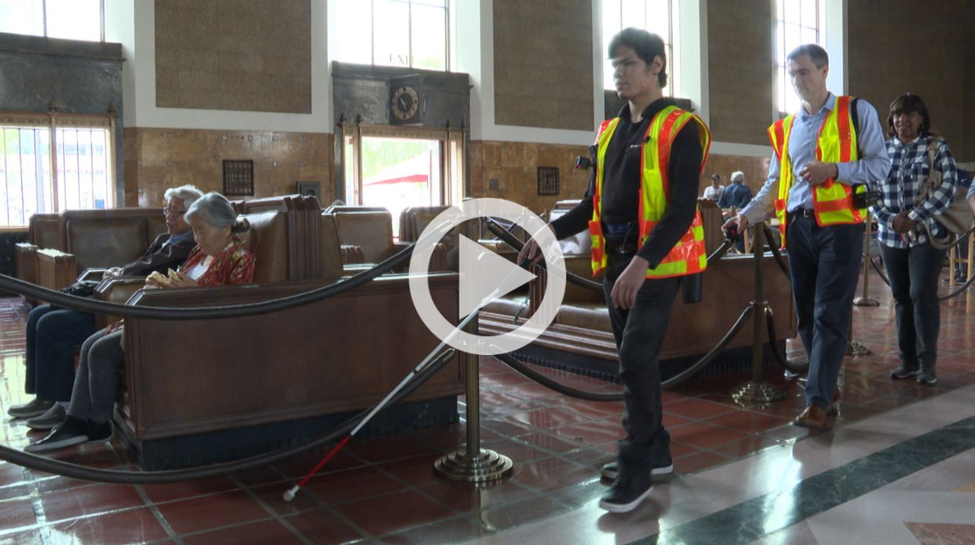
To implement these solutions in BC and across Canada, we need local and regional governments, transit authorities and others to step up as they recently did in Washington DC. The attached article and interview, with Tom Pey, CEO Waymap, describes the accessibility service now being implemented by Washington DC Metro across its entire network of stations and bus stops.

App to Help Blind People Navigate Public Transit to Debut in Washington – Inside Telecom - Inside Telecom

It remains our vision to implement a similar digital navigation system across the transit system in Metro Vancouver.

How can you help? Share our vision with your friends, family and colleagues.

For more information email us at partners@gnc3.com

Happy travels,.

The Team at Gateway Navigation.

Categories
New Product 2020 IABN Service Transportation

Remote Sighted Assistant: Inclusive Audio-Based Navigation Systems

Be My Eyes and Aira Remote Sighted Assistant

Acts of kindness with global impact. Was the genesis behind the launch of “Be My Eyes” in 2015, The app connects people who are blind or visually impaired with one of the over two million sighted volunteers worldwide via the user’s smartphone and camera.  The user can connect with a volunteer to receive assistance ranging from matching sock colour to a description of their surroundings. The global make up of the volunteer pool offers connections in over one hundred languages.

In 2018, Be My Eyes, partnered with Microsoft Accessibility Group to offer expert connections for app users requiring technology support. This program is expanding with additional technology companies.

This tech for good model has also had significant financial investment in 2019 / 2020. The quality of this service continues to expand and develop.

To get started with Be My Eyes or to find out more information click on the following link: https://www.bemyeyes.com/get-started

Aira also a remote sighted assistant service is viewed by many as the gold standard in this market segment. Rather than enlisting sighted volunteers. Aira, hires and trains agents to assist explorers (app user) in tasks ranging from reviewing written correspondence to navigating unfamiliar or complex environments. The app also utilizes the user’s smartphone sensors enabling the agent to more accurately and confidently provide wayfinding information to the app user.

The main wayfinding limitation with Aira and any remote sighted app. Is that the agents navigate interior spaces by reading signs using the smartphone or smart glass’s camera. A process that can be challenging for both user and agent. Presumably, as the technology advances and more venues provide inclusive audio-based navigation systems. Either the live agent or developing artificial intelligence will utilize digital mapping pinpointing the user’s location. Enabling greater indoor and outdoor wayfinding with a high degree of accuracy and reliability.

Currently, exterior GPS under perfect conditions offers accuracy within five metres but common signal interference within cities can reduce accuracy to only fifty metres or no signal at all. Interior systems that rely on radio frequencies, such as Wi-Fi, beacons and G5, also have limitations to accuracy due to interference variables. Good news is that recent innovations utilizing body movement is improving accuracy and consistency in digitally mapping users in interior and exterior spaces.

That being said, Using Aira to navigate situations such as queuing up for check in, security or baggage pick up; an Aira agent’s assistance at an airport can be very helpful. In addition, if your travelling companion is over editing their descriptions of your surroundings or seem exasperated with your questions. Aira’s agents are paid, trained and delighted to provide descriptions or answer your questions. A very useful feature and marital aid.

Aira is a fee-based service and even with recent promotions can be financially out of reach. Aira and partners to address this barrier of access have developed Aira Free Zones. Where persons attending a venue, can download the app to their smartphone and access the service free of charge within a geofenced area.

In Canada and Internationally, Aira Free Zones are made available free of charge at a number of airports including YVR Vancouver and YYZ Pearson Toronto; internationally, LHR London Heathrow and a number of US Airports.

Download the Aira App directly on your mobile phone from Google Play or the Apple App Store. After downloading the app, you can register as a user with your phone and email address, and you will be asked to agree to Aira’s Terms of Service. Aira will then send you a four-digit code to verify your mobile number. Upon verification you are ready to connect with an Aira agent.

You do not need to subscribe to an Aira plan to access promotions or free zones.

Both, Be My Eyes and Aira, do not replace the need for blind or visually impaired users to have good orientation and mobility training. The services are an accessibility tool and have limitations.

For more information on how remote sighted assistance can support a venues accessibility and inclusion objectives. Contact us at Gateway Navigation via email partners@gnc3.com